
Newsletter #30: Lies, Damn Lies, and Snake Oil
Jul 29, 2026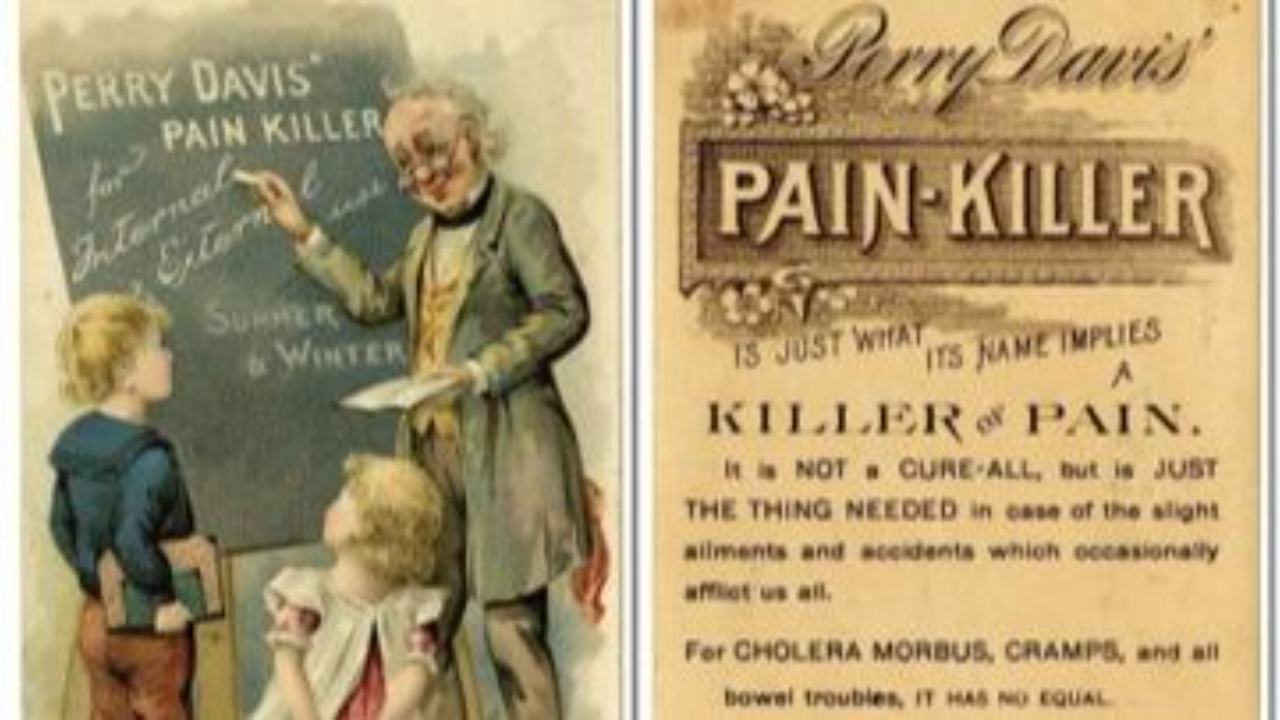
Dubious claims and subterfuge have been used to hawk products since antiquity. But it also remains a real risk today: particularly when consumers become complacent or rely on consumer protections to save them from renegade social influencer posts or company-sanctioned, misleading assertions.
“Caveat emptor,” or buyer beware, was a staple of Roman law over 2,000 years ago. It warned a buyer to inspect an item they were about to purchase: because in those bustling and unregulated markets, where information asymmetry was rampant, a buyer rarely had recourse after the transaction had taken place. 1,600 years later, the doctrine was cemented in English law in the landmark case Chandelor vs. Lopus, when the courts determined a buyer of a supposed magical healing stone was not entitled to a refund once it proved to be fake, since they didn’t have an explicit legal warranty.
The history of health and wellness products has repeatedly shown that misleading assertions and slick packaging can work wonders to sell even the fakest products. Ben Gilbert and David Rosenthal of the Acquired podcast delved into the history of snake oil salesmen in their Coca-Cola episode. “Before the Civil War, these were medicines that promised a cure to all sorts of ailments – nausea, indigestion, headaches, cancer, tuberculosis, skull fractures, paralysis, and impotence…all based on zero research, zero studies….After the Civil War, there were so many wounded soldiers in America that were in such chronic pain that the market for medicines like this, from these snake oil salesmen just exploded.” In fact, these so-called “patent medicines” were neither patented (because that would have required a disclosure of ingredients) nor medicines. In an attempt to fabricate credibility, reinforce their messages and stimulate demand, these snake oil salesmen began investing in newspaper advertisements to extoll the supposed virtues of these products. The birth of the advertising industry in the United States was largely through the amplification of products with questionable efficacy.
A pattern amongst these products is worth noting: in many cases, a legitimate product with genuine efficacy existed. Entrepreneurs recognized the commercial opportunity, stripped out the active ingredient (or were unaware what that active ingredient was in the first place), retained the marketing story, and sold an inferior copy at scale. The consumer, lacking any means of assessing the actual contents, made purchase decisions based on branding, testimonials, and narrative — all of which the competing product replicated perfectly well without any of the underlying substance.
Some of these products are still around today, but no longer purport to have health benefits. Along with Coca-Cola (which originally did have active ingredients in cocaine- hence “coca” – and caffeine from the kola leaf – “cola”), Dr Pepper, 7-Up and Corn Flakes all were originally marketed as medicines or tonics but successfully pivoted to become successful products that didn’t need to rely on dubious claims. But most were eventually unveiled as the snake oil that they were, such as Lydia E. Pinkham's Vegetable Compound, Dr. Miles' Nervine, Hamlin's Wizard Oil, and Hostetter's Stomach Bitters.
In the case of Hostetter's Stomach Bitters, the medicine contained 44% alcohol (stronger than most whiskeys), which likely explains its reported effectiveness at making the consumer feel better, at least temporarily. Lydia Pinkham's famous compound, marketed specifically to women experiencing "female complaints," was approximately 18% alcohol and contained various botanical extracts of uncertain therapeutic value.
By 1906, the year the Pure Food and Drug Act was passed, the industry was generating an estimated $75 million annually, or roughly $2.5 billion in today's dollars. And since manufacturers spent lavishly on advertising in newspapers and magazines, this created a mutual dependency: newspapers relied on patent medicine advertising revenue, and patent medicine companies relied on the newspapers to distribute their claims. For decades, this arrangement made journalists reluctant to investigate the products being advertised in their own pages.
The passage of the Pure Food and Drug Act during the Roosevelt administration ushered in an era of greater consumer protections, which continues to today. But the advertising industry has become far more sophisticated as well: first with billboards, and then augmented by radio and television, and then the internet, and now podcasts and social media. And there is no shortage of brands launching today with no proof of efficacy and in some cases, dubious claims made to encourage demand.
Consider today’s market for wellness products. The global market for dietary supplements, for instance, exceeded $160 billion in 2023, and products in this space are routinely marketed with claims that would have felt at home in the 1880s: ancient wisdom validated by modern science; unique formulations derived from exotic or hard-to-source ingredients; transformative results achievable in days or weeks; endorsements from aspirational figures; and a strong implication that the mainstream medical establishment is either unaware of or actively suppressing the product's benefits. Then enter social media influencers, who are (at best) loosely associated with the brands, and which sometimes amplify or create their own dubious claims. Given the volume of noise, it is difficult to tell fact from fiction.
Many of the categories dominating social media advertising today are the same that were susceptible to snake oil salesmen 150 years ago. On TikTok Shop, for instance, Beauty & Personal Care products account for 22% of share; Health & Wellness 5-10%; and Food & Consumables 6-7%. On Instagram, Beauty & Skincare is the second-largest category, while Food & Beverage is in third place and Health & Wellness sixth largest.
On podcasts, consumer packaged goods are the second largest category of advertisers (behind financial services firms), making up 13% of advertising spend. Direct to consumer brands account for 10% and Health and Pharmaceuticals account for 9%.
Of course, modern-day consumer advertising is not necessarily snake oil sales. And consumers are increasingly skeptical, researching more with AI tools, and expecting third-party confirmation of claims made rather than blindly trusting a company’s own marketing. But at the same time, consumers are also increasingly trusting social influencers and others to support their decisions to purchase and use products, which isn’t exactly clinical proof of efficacy.
As a consumer venture investor, I am highly attuned to brands making dubious or false claims of efficacy, with the 2,000 year old term “caveat emptor” front and center in my due diligence process. It is beneficial to be skeptical, and to learn from the lessons from snake oil salesmen. Three such lessons that I consider regularly when assessing potential portfolio companies are:
- Claims are cheap and efficacy is expensive. The economics of the patent medicine era were compelling because the cost of making a health claim was effectively zero while the marginal cost of actually delivering the claimed benefit was high or impossible. Modern brands that are built primarily on claims, and without the underlying product performance to support them, tend to have characteristic profiles: high initial velocity driven by novelty and marketing, followed by declining repeat purchase rates as consumers fail to experience the promised results.
- Trust, once lost, tends to stay lost. The patent medicine industry's collapse — accelerated by muckraking journalism— did not merely damage individual brands. It damaged the credibility of the entire category for a generation. Categories that tolerate fraudulent participants tend to pay a collective reputational price when those participants are eventually exposed.
- Genuine efficacy is a durable competitive advantage. The legitimate players in the patent medicine era (the ones who made products that actually worked) were largely invisible in their own time, because the fraud made the whole category look disreputable. But after the regulatory environment improved, the products with genuine efficacy were the ones that survived and scaled. The same dynamic is visible in every major consumer health category: the brands that built their claims on actual science tend to outlast the ones that built them on testimonials and narrative.
At Ocampo Capital, we invest in these categories because there remains a massive opportunity to help keep people healthy. But we are wary of unsubstantiated claims and hollow brands, and therefore require robust proof of efficacy prior to investing. While this proof of efficacy can be expensive and slow, it also is a durable moat, driving strong repeat purchase rates over time.
Just yesterday I attended an investor meeting where the conversation was about how to articulate a company’s novel science in a way that is easy for consumers to comprehend. I would much rather be trying to figure that out, instead of hawking something with dubious value. It certainly is easier to sleep at night knowing our portfolio companies’ products actually work.
Postscript: Since we believe that consumers are right to expect proof of product efficacy, we will be announcing shortly an investment in a new company for Fund II whose purpose is to prove clinical efficacy of consumer products at a much lower cost than historically was the case – thereby helping separate great products from modern snake oil. Caveat emptor remains, but hopefully snake oil will eventually become a truly antiquated concept.
Ocampo Capital is a trajectory amplifier: It advises, supports, and invests in consumer companies, aiming to help them achieve their aspirations.
We hate SPAM. We will never sell your information, for any reason.
