
Newsletter #31: An Interview with the Co-Founder and CEO of ZBiotics
Aug 18, 2026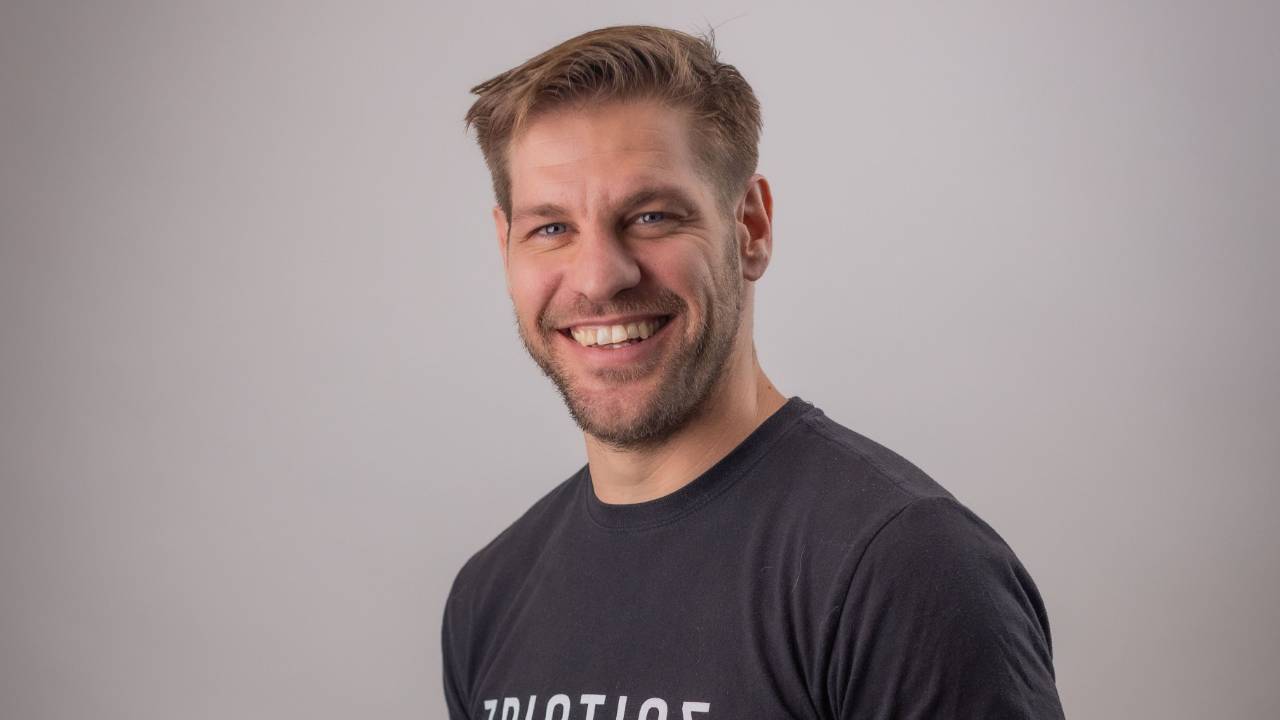
Karl Bracken of Ocampo Capital recently connected with ZBiotics co-founder and CEO, Zack Abbott. In this wide-ranging interview, we spoke about entrepreneurship, developing the category of genetically-engineered probiotics, educating consumers about the science, and the satisfaction of having consumers truly advocate for your products.
KB: Thank you for being here, Zack! Starting off, what is the mission of ZBiotics?
ZA: ZBiotics’ mission is to make genetically engineered products that improve everyday life—and, in doing so, help create a future in which people understand and embrace genetic engineering as a useful tool.
We believe biotechnology is an incredibly important and valuable lever for humanity. And using it to solve ordinary consumer problems in ways that conventional products can’t is a great way to demonstrate that value in a very real way that people can understand. In so doing, we can elevate the conversation around genetic engineering and GMOs beyond “good or bad” or “is it or isn’t it” into something more nuanced and rational. We do this by building products people genuinely love, and then transparently connecting the benefit with the genetic engineering – every bottle and box is labeled “proudly GMO”.
KB: What is your lineup of currently available products?
ZA: We currently have two products.
Our first product, Pre-Alcohol™, is a genetically engineered probiotic designed to break down acetaldehyde, an unwanted byproduct of alcohol. It is taken before drinking and was the first genetically engineered probiotic of its kind available directly to consumers.
Our second product, Sugar-to-Fiber™, is a genetically engineered probiotic designed to convert small amounts of dietary sugar into a prebiotic fiber inside the gut. Its primary purpose is to create high quality prebiotic fiber for your gut microbiome from the foods you’re already eating. This is meant to address the fact that 95% of Americans don’t get enough fiber in their diet.
Together, the products demonstrate the broader potential of our platform: designing probiotics to perform specific, useful functions inside the body.
KB: What inspired you to start ZBiotics?
ZA: I was struck by the enormous gap between what genetic engineering could do and what consumers were actually experiencing from the technology.
Most public conversations about GMOs revolved around commodity agriculture and an abstract debate about whether genetic engineering was “good” or “bad.” Meanwhile, the technology had become extraordinarily precise and powerful. I believed that if we could use it to solve a problem people immediately understood—and build a product whose value they could experience for themselves—we could create a great business while also changing the way people thought about biotechnology.
In addition, I was baffled that no one had done this purely from a product perspective. This seemed like such low hanging fruit and so obvious! We could create purpose-built, better products that we could patent and own. Why wasn’t anyone already doing this?! Probiotics are capable of performing all kinds of useful functions in the body. Genetic engineering allows us to give a probiotic a precise new function and turn it into something more like a tiny, purpose-built enzyme factory. To this day, I still can’t believe we were the first to do this, but I am grateful we had the opportunity to blaze this trail!
KB: That’s amazing. How did you come up with the name of your company?
ZA: It was kind of an accident, actually! I just needed a name to file incorporation paperwork when I first started the company. I took the “Z” from my name and used it to make a play on “probiotics” – kind of like, “these are going to be new probiotics, made by Zack → ZBiotics.” At that time, it was just me planning to do some science experiments in a lab. I never intended for that to actually be the name of the company in the long term. I just didn’t want to spend a bunch of time thinking about a name, so I went with that after about 5 minutes of thinking about it, and I figured if the company ever went anywhere we could always change the name to something better. But after I made our prototype and we were actually building out a brand and planning our go-to-market, we did a bunch of naming exercises, and people actually liked ZBiotics haha! And it was a unique word and we were able to get all the relevant website and social media accounts around it, so we just stuck with it!
KB: That is funny- it was serendipity! Please tell us about your experiences leading up to starting ZBiotics. What about your background helped you?
ZA: My scientific background is in microbiology. I earned my Ph.D. studying bacterial genetics, and in particular I focused my research on how bacteria turned on and off different functions in response to their environment. Ultimately, I leveraged this deep understanding of bacteria to build the foundational technology that underpins our products. My PhD is where I gained the technical skills and expertise that made building our products possible.
After my PhD, I worked at a contract research organization designing clinical trials for drug companies. That experience was valuable because coming out of grad school my general assumption was that translating science into practical applications meant making drugs. I learned a ton about what it takes to bring a drug to market, and importantly, I learned that the drug industry would not likely provide me with the opportunity I was most passionate about: being able to use biotechnology to invent something, and then getting that product into people’s hands. The path to bring a drug to market is a very long and expensive process, and inventors of the initial technologies and drugs usually need to sell their inventions to large pharma companies to really get them over the line and into people’s hands. Because of this, the inventor gives up control, and even if they’ve developed something great, it may never make it to market due to financial reasons or competing priorities from the drug company that are totally out of the hands of the inventor. So I saw that using biotechnology in the consumer space was both a wide open opportunity, and one that would allow me to have a direct relationship with the end users of my invention. That was much more exciting to me.
KB: Who is the current ZBiotics customer?
ZA: Our customers are people who want science-backed products that solve specific, recognizable problems.
For Pre-Alcohol, that includes everyone from younger social drinkers to parents, professionals, and health-conscious consumers who want to enjoy a social occasion but still want to prioritize all of their ambitions and commitments the next day, like their morning workout, day 2 of their vacation, or a long to-do list. What unites them isn’t a particular demographic so much as a mindset: they value their time, they care about how they feel, and they are willing to think ahead and invest in their next day.
KB: What were the biggest surprises as you launched ZBiotics?
ZA: There was a lot of skepticism around whether our product would actually work, but that wasn’t a surprise. This category is notoriously full of snake oil, and so we knew we had a lot of work to do to earn people’s trust in that regard. However, something we didn’t anticipate was how much people’s identity was tied up into their purchase decisions around a product positioned around alcohol. Most people (in the US at least), don’t like to identify as “drinkers” and there was a lot of hesitation around what purchasing our product might “say about me”. However, we had always emphasized that the product was for responsible people who care about their next day, not for people who were looking for a “get out of jail free card” on frequent irresponsible drinking. That emphasis was ultimately extremely important in people feeling like the product aligned with their identities and their view of themselves.
KB: ZBiotics had incredible growth in the eCommerce channel, and you recently took it into brick and mortar retail. How has the pivot to omnichannel gone? Any learnings for other young companies hoping to do the same?
ZA: The transition has gone extremely well! We’re seeing very high velocity in the retail locations we’re at, and we’re seeing some exciting signals in hospitality and on premise (e.g. hotels, high-end restaurants, etc). But we’ve learned that retail is not simply eCommerce placed on a shelf. It is a different environment with different constraints.
Online, we have space and time to educate people about the problem, explain the science, and answer questions. At retail, the packaging and placement may have only a few seconds to accomplish the same thing. That has required us to be strategic about placement – both in terms of which kinds of stores carry the product, and where in those stores the product can be found. It has also forced us to become sharper about our message: What is the product? When do I use it? What benefit should I expect? Why should I believe it?
Retail also adds operational complexity—forecasting, inventory allocation, merchandising, retailer relationships, and measuring performance with less immediate data. Young companies should be realistic about the capabilities and working capital required.
Our biggest learning is that retail works best when it builds on genuine consumer demand rather than substituting for it. A strong eCommerce business gave us proof that customers wanted the product, a base of awareness, and a mechanism for continuing the education that retail alone cannot provide.
KB: What have been the most memorable moments or milestones in ZBiotics’ history, thus far?
ZA: Launching Pre-Alcohol in 2019 was the first major milestone. Until that moment, ZBiotics was still largely an idea and a scientific project. Seeing strangers buy the product, try it, and tell us that it made a meaningful difference was unforgettable.
Other important moments include launching Sugar-to-Fiber, which proved that ZBiotics could extend beyond a single hero product; entering brick-and-mortar retail; and surpassing ten million bottles sold.
But some of the most memorable moments are smaller: reading an early customer review from someone across the country who got the most out of a weekend trip with friends, seeing a skeptical customer become an advocate, or watching our team grow from two co-founders just figuring everything out into a team of 45 incredibly capable people building something beyond what I thought was possible.
KB: What’s the biggest challenge you have faced thus far as a company?
ZA: Our biggest challenge has been building a new kind of company and a new category at the same time.
There was no established playbook for bringing a genetically engineered probiotic directly to consumers. We had to work through the science, manufacturing, quality systems, regulatory considerations, consumer education, and brand positioning simultaneously. In many cases, the existing frameworks weren’t designed with a product like ours in mind.
Category creation also requires patience. You aren’t merely persuading someone that your product is better; you first have to explain why the problem is solvable and why this entirely new type of solution should exist. The challenge has been maintaining scientific rigor while communicating simply enough to build a mainstream consumer brand.
KB: ZBiotics has a robust pipeline of new products in development. How do you think about the prioritization of new product development, given the scientific rigor that goes into each product developed by ZBiotics?
ZA: Our technology can theoretically address a very wide range of problems, so prioritization is essential. The limiting factor isn’t ideas—it is identifying the ideas worthy of several years of scientific and product-development effort.
We look for problems that are specific, widely understood, and poorly served by existing solutions. The benefit should be observable or measurable, rather than a vague promise of improved wellness. The mechanism should be easy enough to explain, and genetic engineering should provide a meaningful advantage over conventional ingredients.
We then evaluate technical feasibility, safety, regulatory and claims risk, differentiation, commercial potential, and our ability to validate the product rigorously. An exciting market is not necessarily a strong product opportunity. We want to know that we can build something distinctive, demonstrate that it works, and give consumers a compelling reason to care.
We are currently the only company in the world that has a genetically engineered probiotic on the market. We have the opportunity to build totally novel ingredients that are purpose-built to solve problems that nothing else out there can solve – where the solutions don’t even exist yet! So we would be doing ourselves a disservice by trying to capitalize on some trend that 100 other brands are flooding the market with products for. We look for where we can make something truly unique and solve the previously unsolvable.
KB: What advice would you give other entrepreneurs?
ZA: Choose a problem that you are deeply passionate about. Being an entrepreneur requires doing something new, which means there is no playbook, and there will be hundreds of failures and setbacks along the way as you blaze your trail. It’s a lot easier to have thick skin and keep getting back up through all those failures and setbacks if you’re passionate about what you’re working on and you can’t imagine a world without it.
I would also encourage founders to get their idea in front of reality as quickly as possible. Talk to customers, build the simplest meaningful version, and identify the assumption that could most readily kill the business. We entrepreneurs naturally spend time refining the parts of the idea we already believe. The greater value often comes from actively searching for the ways in which we might be wrong.
KB: What is the best advice you have received from another entrepreneur?
ZA: A good founder knows when to get out of the way. As entrepreneurs, our passion is an asset and the reason we even bother to take that initial leap when others don’t. But it also makes it exceptionally hard for us to give up control of things that we built. For instance, it was hard for me to give up the R&D work, and the brand and messaging work, and the customer service. I cared so deeply about our science, and how we explained our product, and that every customer would have the best possible experience we could give them, even when something went wrong. But if I didn’t get out of the way and let other, more qualified people take those roles over, we never could have scaled. One of my mentors told me that a founder’s job is to identify the next function that is critical to the company, do that function until you know about 15% of it – just enough to know what a real expert actually looks like – and then go out and hire someone great to do it for you. Then you get out of the way.
KB: That is crucial advice. A leader HAS to learn how to leverage his or her time by trusting the experts. Beyond that, what traits in entrepreneurs are most crucial to success, in your experience?
ZA: In a word: Open-mindedness.
For instance, while persistence is essential, effective persistence is different from stubbornness. The best entrepreneurs remain deeply committed to the outcome while being willing to change almost everything about how they reach it.
They also need to be willing to commit to an idea or hypothesis early, but simultaneously be willing to be wrong after they gather more information. Founders are required to believe in something before there is enough evidence to make that belief comfortable, but they must still recognize contradictory evidence and respond to it. Holding conviction and skepticism at the same time is difficult and crucial.
KB: What do you see as the biggest upcoming challenges and opportunities for ZBiotics?
ZA: Our biggest opportunity is to establish genetically engineered probiotics as an entirely new category of consumer product. Pre-Alcohol showed that consumers will embrace this technology when it solves a clear problem. Sugar-to-Fiber expanded the platform, and our pipeline gives us the opportunity to demonstrate how broadly the approach can be applied.
The challenge is scaling without losing what makes ZBiotics distinctive. We need to expand retail distribution, continue growing our existing products, and build new ones—all while maintaining an unusually high scientific, manufacturing, and ethical standard.
We also have to bring consumers along with us. As our applications become broader, we must continue communicating clearly about what we engineered, why we did it, what the product can and cannot do, and how we have evaluated it.
KB: How do you leverage advisors?
ZA: We use advisors to add perspective and pattern recognition where the team has limited experience. They can help us see around corners, challenge assumptions, make introductions, and distinguish between a genuinely unusual problem and one that many companies have encountered before.
The most valuable advisory relationships are active and specific. Rather than asking a broad question like “What should we do?”, we try to provide context, explain the decision and its constraints, and ask the advisor to pressure-test our reasoning. Ultimately, the company still has to own the decision.
KB: What does an ideal advisor look like to you?
ZA: An ideal advisor combines relevant experience with intellectual independence. They understand the context well enough to offer practical advice, but they aren’t so attached to a particular playbook that they assume our business must follow it.
The best advisors are candid, curious, and generous. They listen before prescribing, identify the question beneath the question, and tell us when they think we are wrong. They also recognize the difference between advising and deciding: their job is to help us think better, not make the call for us.
KB: What kind of advice do you have for me and Ocampo Capital?
ZA: See above! Continue to help us learn to build the operational expertise internally that you bring to the table!
KB: This is great! Thank you so much for taking the time to talk to Ocampo Capital about the ZBiotics journey!
Ocampo Capital is a trajectory amplifier: It advises, supports, and invests in consumer companies, aiming to help them achieve their aspirations.
We hate SPAM. We will never sell your information, for any reason.
