
Newsletter #29: A Retrospective Case Study of Nobel Prize Winning Research: Behavioral Economics and the Palisades Fire
Jun 25, 2026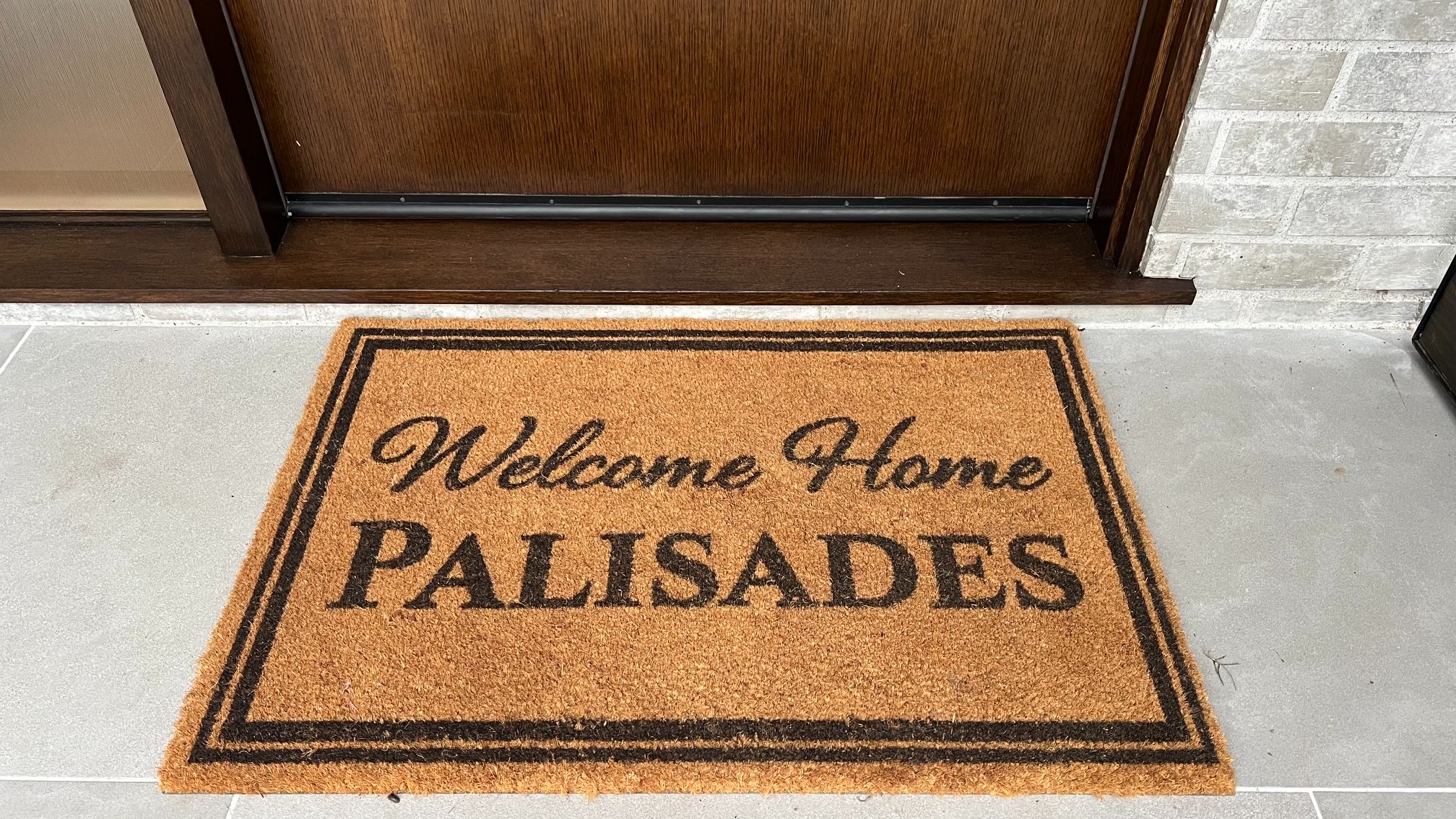
This week we move back into our house in Pacific Palisades, after a full eighteen months of post-fire remediation. We are hugely grateful that our house did not burn, well aware that it was spared because we got lucky, and are happy to be present for the resurrection of the town. But we also know we will be living in a construction zone over the next several years as new homes pop up out of the now-empty lots.
In reflecting on the past eighteen months, what struck me is the worst part of the experience was not the fear that our home had burned down. It actually was the lack of knowledge in how to manage the process after the fire had stopped burning- and in witnessing the blatant opportunism, greed, and attempts by some to benefit from others’ misfortune.
As we attempted to digest the waves of confused information being thrown at us in the weeks and months after the fire, I realized that the confusion was sometimes purposeful; the lack of information was usually self-serving; and the profit motive was driving all of it. I had studied behavioral economics in business school, and had attempted to put some of its concepts into action during my career at Target, so I was familiar enough to notice that I was witnessing a case study of behavioral economics playing out real-time in the aftermath of the fires.
I should have known this was the case the first day I went up to the house following the fire. The day was reminiscent of a post-apocalyptic scene from McCarthy’s famous book The Road: masked people wearing backpacks and riding on scooters, looting burning lots. Strange smells. Hissing sounds punctuated by explosions in the distance. The petty crimes perpetuated by those thieves that first day was infuriating – but over time, it gave way to another kind of opportunism, which was larger, more insidious, and more calculated.
Over the months that followed, as we faced numerous instances of bad actors displaying classic concepts of behavioral economics, I reviewed all the Nobel Prize-winning papers on the topic. I found that no less than six economics Nobel prizes have been given for concepts that we witnessed on a regular basis, by numerous parties purporting to be doing a service but actually trying to benefit from the misfortune of victims of these wildfires. I figured this topic might be of interest to some of you, as it became increasingly interesting to me in identifying real-time these behaviors in the wild.
The following concepts are ordered by the relative frequency that we saw them take place since January, 2025:
- Akerlof, Spence, Stiglitz — 2001, "Markets with Asymmetric Information"
Akerlof first introduced the notion of "asymmetric information" as a factor in the performance of some markets, work that paved the way for the development of current theories of behavioral economics. Markets are characterized by asymmetric information when actors on one side have much better information than those on the other — his canonical example was borrowers knowing more than lenders about repayment prospects.
Information asymmetry was everywhere after the fires, as the homeowners had never experienced anything like this and did not know where to begin. For instance, what actually had to be done to make your still-standing home inhabitable? What would make you sick if you were exposed to it after the fires? For those who lost their homes, what did you have to do to remediate your lot so that it could be built upon again? What would the city do to aid in the recovery? Would our home be condemned and have to be torn down, even if it withstood the fire? What would insurance pay for, and what would they not pay?
This last point was particularly acute in the behaviors exhibited by the sales teams of third-party remediation companies. They would attempt to scare homeowners by highlighting the health risks lurking in homes after the fires – and promise that they could do a better job of holding insurance companies accountable than could the homeowners. Of course, this service would be paid for by taking a nominal cut of the insurance payment to the homeowner.
- Kahneman & Tversky's Prospect Theory – 2002
Kahneman's main findings showed how human decisions may systematically depart from those predicted by standard economic theory under uncertainty. Kahneman and Tversky formulated prospect theory as an alternative that better accounts for observed behavior, with a major component being loss aversion.
With loss aversion, people feel losses more acutely than equivalent gains. This was exhibited in several ways in the Palisades: in people being underinsured going into the fire because they failed to rationally consider the future risk of a fire; and during the fires where people failed to evacuate early because they underappreciated the risk literally on their doorsteps. Lastly, it was reflected in people’s reactions to the loss of their homes after the fires. For instance, one neighbor of ours would drive back up every day to the lot where their home once stood, and would sit in their car weeping for hours on end- and yet when offered the chance to rebuild, took the insurance settlement and moved away.
- Hurwicz, Maskin, Myerson — 2007, Mechanism Design Theory
Mechanism design theory was the concept that caused me to write this post. One of the three Nobel prize winners, Myerson, was a professor at my business school when he conducted his research into this phenomenon, whereby private information is withheld from public view for personal benefit.
We saw mechanism design theory at play regularly. Specifically, insurers, adjusters, and mitigation companies were fully incentivized to not fully disclose their information so they could make more money through the opaque process. Since there was no efficient mechanism to ensure the truth came out, some parties would bank that an audit would not take place and would submit for payment questionable charges. We tried to insert ourselves in the middle of the process to force the truth to come out with regards to the work that had to be done to our house, because we felt it was dishonest that one specific party was trying to exaggerate their work to get paid more. And not subtly, on one or two line items either: in actuality, over 80 specific line item charges. Because the process was so poorly designed and hard to work around, and because the fear of class action lawsuits against the insurers was real, those opportunistic companies continue to pad their charges on other properties unabated, and without fear of recourse.
- Bernanke, Diamond, Dybvig — 2022, Banks and Financial Crises
Diamond and Dybvig's research examined how banks smooth the conflict between savers wanting short-term access to money and the economy needing long-term investment, and how governments can help prevent runs by providing deposit insurance and acting as lender of last resort. Substitute "insurers" for "banks" and "mass claims after a disaster" for "bank run" — it's structurally the same liquidity-mismatch problem.
Given so many in the Palisades (and likely equally many in the concurrent Eaton Fire in Altadena) relied on the California FAIR Plan (insurer-of-last-resort), it needed state backstopping to remain solvent. This dynamic was very similar to deposit insurance studied by Bernanke, Diamond and Dybvig.
- Aumann & Schelling — 2005, game theory of strategic interaction
Aumann and Shelling’s work extended and applied game theory to analyze strategic interaction among agents, where parties act on the basis of what they think the other party will choose. These interactions are frequently associated with asymmetric information where some parties know something others do not. This academic research is useful for modeling the standoff between insurer, regulator, and homeowner as a repeated game with reputational stakes.
I didn’t go so far as to model the interactions we witnessed, but I will say this: it was indeed a standoff at times, and asymmetric information was rampant. As a homeowner facing a disaster like this, you have many of the cards stacked against you because (particularly in the early days after the disaster) you are at a major information disadvantage.
In those early days, I kicked myself for not knowing more about the process, nor the constituents trying to cash in on our misfortune. But I learned a lot, and at times I was fascinated by how you could predict the behaviors of certain of the actors based purely on the behavioral economics research I had read.
The greatest learning I had throughout the entire process, however, was knowing who you could trust and who you could not. Having trustworthy experts located at strategic points in the confused web of opportunists was invaluable for reducing the information asymmetry. And based on the information shared by those trusted parties, we were able to know when to throw out a “trust land mine” question (a question for which you already know the answer, in order to test the honesty of another party). Knowing who was untrustworthy limited our likelihood of making very costly errors, which could have cost us hundreds of thousands of dollars in incremental payment into their pockets. And it also allowed us to “nudge” the outcome in the right direction- which Thaler also won the Nobel prize for in 2007.
Ocampo Capital is a trajectory amplifier: It advises, supports, and invests in consumer companies, aiming to help them achieve their aspirations.
We hate SPAM. We will never sell your information, for any reason.
